ai-visibility
AI Analytics Data Safety: Protect Your Marketing Intelligence
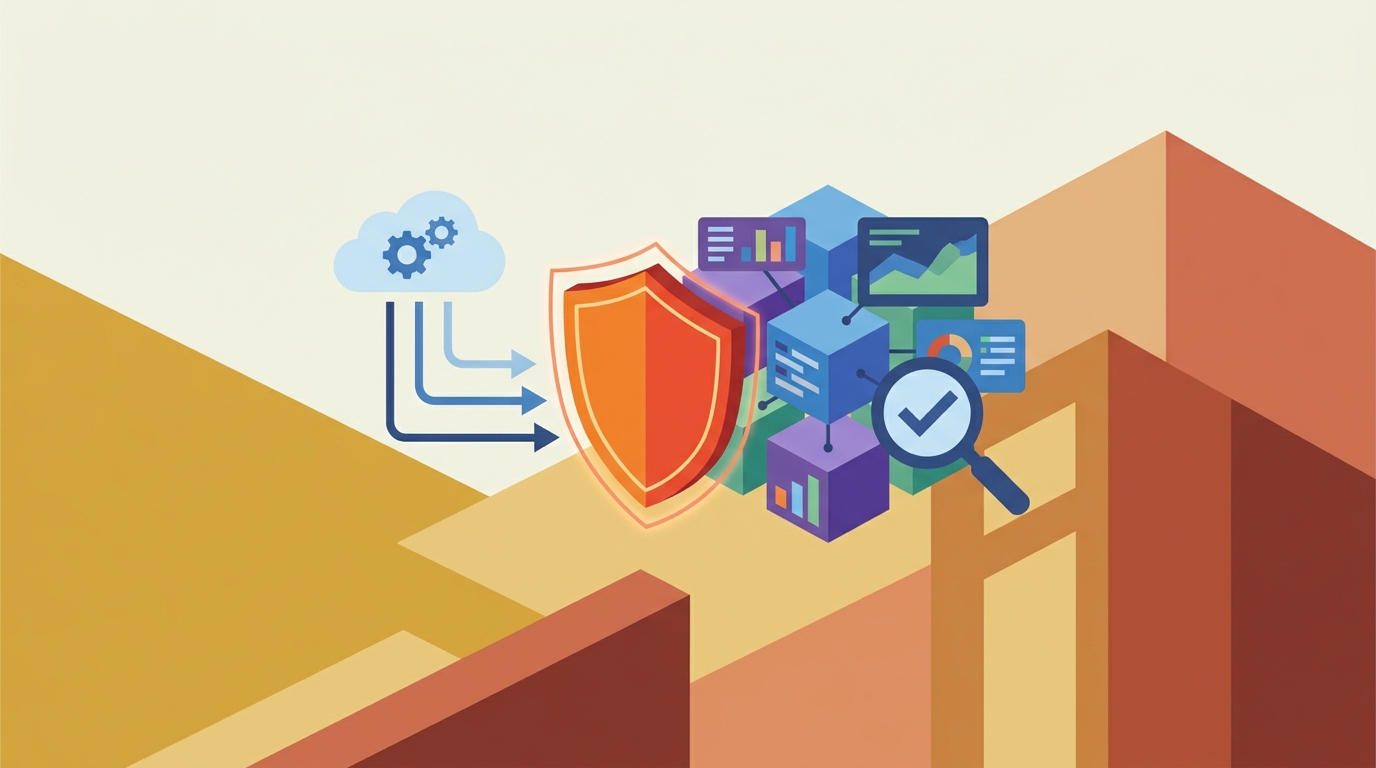
AI Analytics Safety: Protecting Your Marketing Data in AI Platforms
You've connected your CRM, plugged in your ad spend data, and let an AI analytics platform start drawing insights from your customer behavior. It feels powerful. And it is. But somewhere between the dashboard and the model, a question deserves serious attention: where exactly is your marketing data going, and who else might be learning from it?
This isn't a hypothetical concern. As AI analytics tools become standard infrastructure for marketing teams across Tampa and beyond, data security practices vary wildly between platforms. Some handle your data with enterprise-grade rigor. Others treat your customer records as training fuel. Knowing the difference is one of the more important operational decisions you'll make in 2026.
Why AI Analytics Introduces New Data Security Risks
Traditional analytics tools were passive. They stored what you gave them, ran queries, and returned results. AI platforms are different. They learn, infer, and in some cases, share aggregated patterns across users.
That distinction matters enormously when your data includes first-party customer emails, purchase histories, behavioral segments, or anything tied to identifiable individuals. Marketing data protection isn't just an IT concern — it directly affects your compliance posture under privacy frameworks that are increasingly enforced in 2026.
The three risk vectors that marketing teams most commonly underestimate are:
- Model training data exposure — Some AI platforms use customer inputs to improve their underlying models. If your campaign data trains a shared model, competitors using the same platform could indirectly benefit from your audience insights.
- Third-party data sharing — Many AI tools integrate with advertising networks, enrichment providers, and analytics partners. Each integration is a potential data handoff point that may not be clearly disclosed.
- Insufficient access controls — As more team members and agencies connect to AI platforms, role-based permissions become critical. Platforms without granular access controls create exposure through human error, not just technical breach.
What Strong AI Data Security Actually Looks Like
The marketing technology landscape in 2026 includes platforms that take security seriously and platforms that treat it as a checkbox. Here's how to distinguish them.
Data Residency and Isolation
Your data should live where you expect it to live. Reputable AI analytics providers are explicit about data residency — meaning they tell you which country or region stores your data and ensure it stays there. For Tampa-based businesses serving regulated industries like healthcare or financial services, this matters for compliance reasons, not just preference.
Equally important is data isolation. Your marketing data should not commingle with other customers' data in a way that creates inference leakage. Ask your provider directly: is my data used to train shared models? If the answer is ambiguous, treat it as a red flag.
Contractual Protections, Not Just Terms of Service
Most enterprise-grade AI platforms offer Data Processing Agreements (DPAs) — legal documents that specify exactly how your data is handled, who can access it, and what happens if there's a breach. If a platform only points you to a general terms of service page when you ask about data handling, that's a meaningful gap.
A DPA should cover: data retention limits, sub-processor disclosure, breach notification timelines, and explicit opt-out rights from model training. These aren't bureaucratic formalities — they're the contractual foundation of AI platform privacy.
Encryption Standards and Access Logging
Data should be encrypted in transit (TLS 1.2 or higher) and at rest (AES-256 is the current standard). Beyond encryption, access logging tells you who accessed what data and when. This is essential for detecting insider threats and demonstrating compliance during audits.
If you're running paid media for clients in Tampa and managing their first-party data, access logs aren't optional — they're the audit trail that protects you legally.
Marketing Data Protection: Practical Steps for Your Team
Security isn't just the platform's job. How your team configures and uses AI analytics tools has a significant impact on your actual risk exposure.
Minimize the Data You Connect
The principle of data minimization is straightforward: only feed an AI platform the data it genuinely needs to do its job. If you're using AI to optimize email send times, there's no reason to sync your full customer purchase history. Start narrow. Expand access deliberately as you validate what the tool actually requires.
Audit Your Integrations Regularly
Marketing stacks accumulate integrations over time. An AI analytics tool you onboarded six months ago may now have connections to four additional third-party services you didn't explicitly authorize. Run a quarterly audit of what's connected to your AI platforms and revoke anything that isn't actively earning its access.
Train Your Marketing Team on Data Handling Basics
The most common data security failures in marketing aren't technical — they're behavioral. A team member uploading a customer list to an unapproved AI tool, or sharing dashboard access with an external agency without checking permissions, creates real exposure. Short, practical training sessions on data handling expectations go a long way.
Establish a Data Incident Response Plan
If a breach or unauthorized access event occurs, the speed of your response determines the damage. Know in advance: who gets notified first, what your AI platform's breach notification window is (contractually), and what your obligations are to customers and regulators. In 2026, regulators expect documented plans, not improvised reactions.
Questions to Ask Before Adopting Any AI Analytics Platform
Before you connect your marketing data to a new AI platform, run through this checklist:
- Does the platform offer a Data Processing Agreement, and will they negotiate its terms?
- Is my data used to train shared AI models? Can I opt out?
- Where is my data stored, and does it leave that region?
- What encryption standards apply to data in transit and at rest?
- What access controls exist, and can I configure role-based permissions?
- How are sub-processors disclosed, and how often is that list updated?
- What is the breach notification timeline in the DPA?
A platform that can answer these questions clearly and in writing is one that takes AI data security seriously. Vague answers, redirects to FAQs, or promises to "follow up" are signals worth paying attention to.
FAQ: AI Analytics Data Safety for Marketing Teams
Can AI analytics platforms legally use my customer data to train their models?
In many cases, yes — if your terms of service permit it. Standard consumer-tier agreements for AI tools often include broad training rights. Enterprise agreements with explicit DPAs are where you can negotiate these terms out. Always review the data use provisions before onboarding customer data.
What's the difference between AI platform privacy and general data privacy compliance?
General data privacy compliance (like GDPR or CCPA) governs how you handle customer data as a business. AI platform privacy refers specifically to how your AI analytics vendor handles data you share with them. Both matter. Your compliance posture depends on both being solid.
Is anonymized data safe to use in AI analytics platforms?
Anonymization reduces risk but doesn't eliminate it. Modern AI models can sometimes re-identify individuals from behavioral patterns, even in datasets that appear anonymized. Pseudonymization combined with strict access controls offers a more robust protection layer than anonymization alone.
How often should Tampa marketing teams audit their AI platform connections?
Quarterly audits are a reasonable baseline for most marketing teams. If you're managing client data or operating in a regulated industry, monthly reviews of active integrations and user access permissions are more appropriate.
What's the fastest way to reduce AI analytics data risk right now?
Audit what's currently connected to your AI platforms, remove integrations you can't justify, and confirm whether your current vendor offers a signed DPA. Those three steps address the majority of common exposure points without requiring a platform migration.
Ready to see how AI platforms view your business?
Get your free Askable Score — it takes 60 seconds.
Get Your Free Score →Conclusion: Data Security Is a Strategic Advantage, Not Just a Compliance Requirement
Marketing teams that handle data responsibly build something competitors can't easily replicate: customer trust. In Tampa's competitive marketing technology environment, the ability to say — credibly and contractually — that your customer data is protected is increasingly a differentiator, not just a legal obligation.
AI analytics is genuinely powerful, and the answer isn't to avoid it. The answer is to use it with clear-eyed awareness of where the risks live and how to manage them. That means evaluating vendors carefully, establishing internal protocols, and keeping security reviews on the calendar rather than the back burner.
Tampa marketing teams looking for AI analytics support that takes data handling seriously can find more information at Askable — a resource for understanding how AI-driven analytics can be implemented with appropriate data security practices built in from the start.