ai-visibility
Not Showing Up in ChatGPT? Here's Why — and How to Fix It
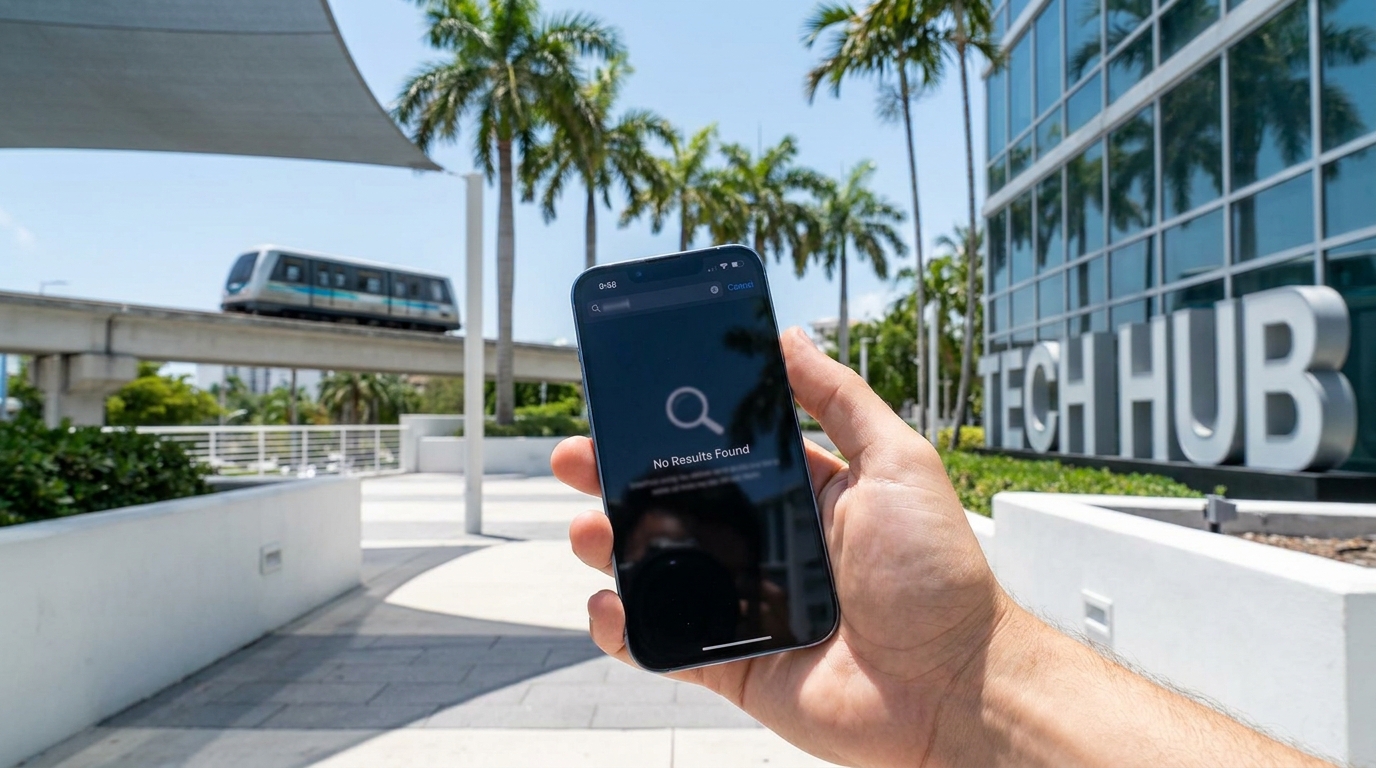
You typed your own business name into ChatGPT. Nothing. You asked it to recommend a company in your category in Miami. Still nothing — or worse, it named three competitors.
You're not imagining it. And you're not alone.
Miami business owners are flooding into AI search this year, and most are discovering the same uncomfortable truth: the SEO playbook that got them to page one of Google does almost nothing for ChatGPT, Perplexity, Claude, or Google's AI Overviews. Different engines. Different rules. Different fix.
Here's why your business isn't showing up — and what actually works to change that.
The Short Answer: ChatGPT Doesn't Crawl the Web the Way Google Does
ChatGPT and other large language models don't "rank" pages. They generate answers from training data, retrieval systems, and a narrow set of trusted citations.
If your business isn't named in the sources those models pull from, you don't exist to them. Period.
That's the core problem. Everything below is a symptom of it.
Why Your Miami Business Isn't Being Mentioned
1. You Have No AI-Citable Footprint
Google rewards pages. AI engines reward entities — businesses that are described consistently across the open web.
If your only digital presence is a homepage and a Google Business Profile, ChatGPT has nothing to chew on. It needs structured mentions across directories, editorial sources, review platforms, forums, and industry roundups.
This is the foundation of AEO — Answer Engine Optimization. Think of it as SEO's younger sibling, focused on getting cited rather than ranked.
2. Your Website Reads Like a Brochure
AI models extract clean, declarative facts. "We deliver world-class solutions tailored to your unique needs" tells a language model nothing.
What works instead:
- Specific services you offer, named plainly
- The neighborhoods you serve — Brickell, Wynwood, Coral Gables, Doral, Little Havana
- Industries you specialize in
- Pricing ranges, response times, and process details
- Founding year, team size, certifications
If a model can't extract a sentence like "[Your Business] is a marketing technology firm in Miami's Brickell district serving SaaS and e-commerce clients," it won't volunteer you as a recommendation.
3. You're Missing From the Sources AI Engines Actually Read
ChatGPT and Perplexity lean heavily on a predictable shortlist: Wikipedia, Reddit, industry publications, Crunchbase, G2, Clutch, well-maintained directories, and a handful of news outlets. For Miami-specific queries, that often includes local business journals and chamber listings.
If you're not in those sources, you're invisible. Most Miami businesses we audit are in fewer than five of them.
4. Your Schema Markup Is Missing or Broken
Structured data isn't glamorous, but it's how machines confirm what your business is. No LocalBusiness schema, no service schema, no FAQ schema — and you're forcing AI engines to guess.
They don't guess. They skip.
5. You Have No Reviews That AI Engines Can Parse
Volume matters, but so does platform diversity. Reviews on Google alone aren't enough. AI engines triangulate across sources — Yelp, BBB, industry-specific platforms, and yes, Reddit threads where Miami business owners ask each other for recommendations.
What Makes Miami Different
Miami's AI search landscape has its own quirks worth knowing.
First, the market is bilingual. A meaningful share of ChatGPT queries about Miami businesses come in Spanish, and models often pull from Spanish-language sources to answer them. If your site is English-only, you're cutting off a real slice of visibility — especially for queries originating from Little Havana, Hialeah, and parts of Kendall.
Second, Miami's business density is brutal. Marketing technology is a crowded category here, with agencies clustered around Wynwood, Brickell, and the Miami Design District. AI engines default to the most-cited names, which means newer firms get squeezed out unless they build a deliberate citation footprint.
Third, seasonality matters. Query volume spikes before hurricane season as businesses scramble to harden their digital operations, and again in Q4 as snowbird-driven commerce ramps up. Visibility built in spring tends to compound through these peaks — visibility built in October arrives late.
Fourth, Florida's lack of state income tax has pulled a wave of out-of-state founders into Miami over the past few years. Many of them rely entirely on AI search to find local vendors because they don't have existing networks here. If you're not in the AI layer, you're not on their shortlist.
How to Actually Fix It
Step 1: Audit What AI Engines Currently Know About You
Ask ChatGPT, Perplexity, Claude, and Gemini the same five questions a prospective customer would ask. Note who gets named. Note what's said about your business — or what's wrong.
This is your baseline. You can't fix what you haven't measured.
Step 2: Rewrite Your Site for Extraction, Not Persuasion
Replace vague claims with specific facts. Add an "About" section that reads like a Wikipedia entry. Include a clean FAQ block answering the actual questions your customers ask.
Short sentences. Real numbers. Named neighborhoods.
Step 3: Add Structured Data
LocalBusiness schema, Service schema, FAQ schema, and Organization schema — at minimum. Validate it. Keep it current.
Step 4: Build Your Citation Footprint
Get listed on the directories AI engines actually trust. Pitch yourself to local Miami publications and industry roundups. Participate in Reddit threads where your category gets discussed — genuinely, not spammily.
Step 5: Generate Cross-Platform Reviews
Don't concentrate them all on Google. Spread the signal.
Step 6: Monitor Monthly
AI visibility shifts faster than traditional SEO. A brand mentioned by ChatGPT today might be gone in 60 days if the citation footprint doesn't keep growing.
FAQ: ChatGPT Visibility for Miami Businesses
How long does it take to start showing up in ChatGPT results?
For a business with a moderate existing footprint, you can see meaningful change in 60–120 days. For brand-new businesses, plan on six months of disciplined citation building before AI engines treat you as a reliable answer.
Does paying for ads in ChatGPT help?
OpenAI has experimented with sponsored placements, but organic citation remains the dominant signal. Ads don't substitute for being a known entity.
Will good Google SEO automatically make me show up in ChatGPT?
No. There's overlap — ranking content does get crawled by AI training pipelines — but AEO requires its own playbook focused on entity clarity, structured data, and third-party citations.
Can I just ask ChatGPT to add my business?
No. You can't submit a business to ChatGPT the way you submit to Google. Visibility is earned through the broader web ecosystem the model learns from.
What if ChatGPT says something wrong about my Miami business?
Incorrect information almost always traces back to a flawed or outdated source the model trained on. Fix the source — your site, your directory listings, your Wikipedia entry if you have one — and re-prompt over time.
The Bottom Line
You're not showing up in ChatGPT because the AI search ecosystem doesn't know enough about your Miami business to recommend you with confidence. That's a fixable problem, but it's not the kind that resolves itself.
The businesses winning in AI search right now started building their citation footprint months ago. The ones starting today will catch up — but only if they treat AEO with the same seriousness they once gave to SEO.
Miami business owners who want this handled by a team focused specifically on AI visibility can reach Askable at https://askable.dev for a diagnostic audit. It's the fastest way to see exactly where you stand in ChatGPT, Perplexity, Claude, and Google AI Overviews — and what it will take to change that.