ai-visibility
How to Optimize for Google AI Overviews in Chicago
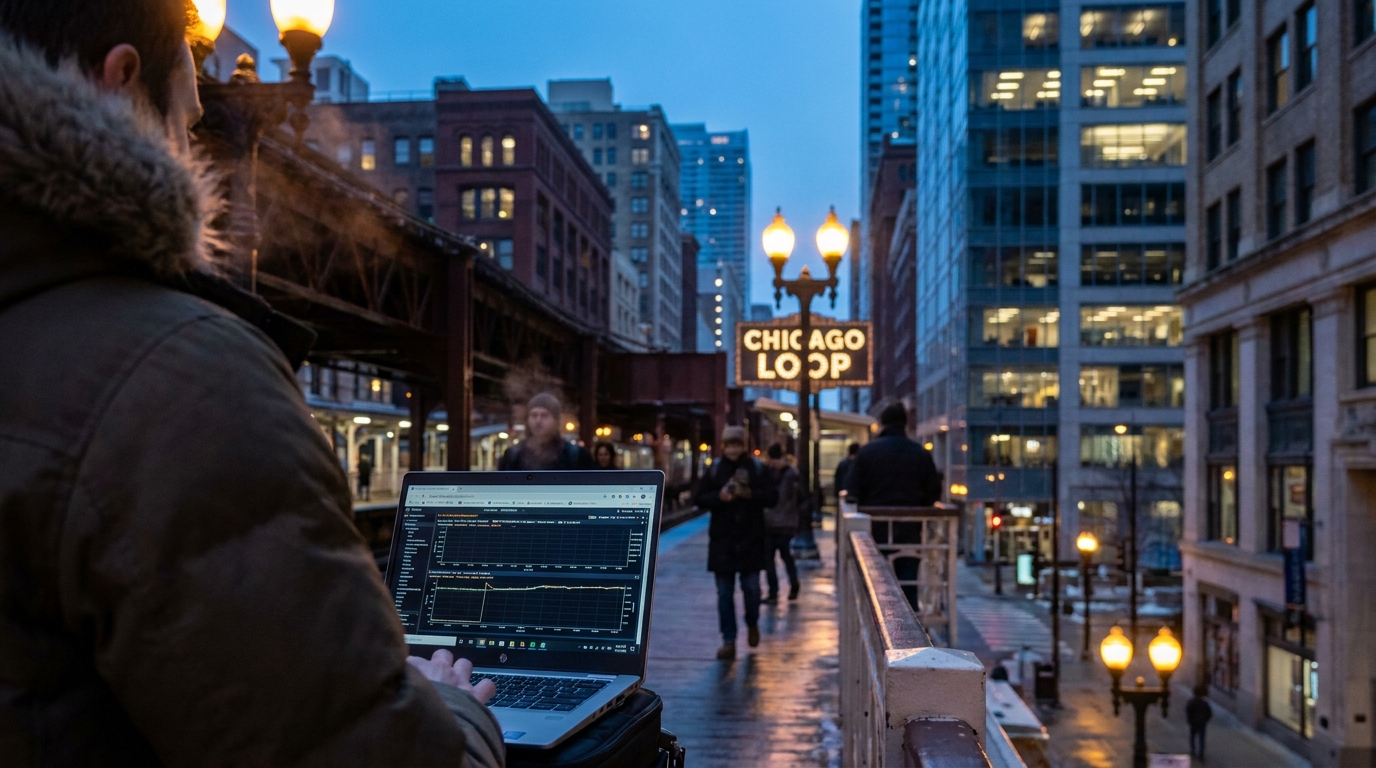
Your customers are getting answers without clicking your site
You've noticed it. Search results in Chicago now open with a Google AI Overview that summarizes the answer before your link ever appears.
The click is gone. The citation is what matters now.
If you run a marketing technology company in Chicago — or you're the marketer responsible for one — your job description quietly changed in 2026. You're no longer just optimizing for blue links. You're optimizing to be the source an AI model quotes when someone in the Loop asks a question.
This is Answer Engine Optimization, or AEO. Here's how to do it in a market as competitive as Chicago.
What Google AI Overviews actually reward
AI Overviews don't rank pages the way classic SEO does. They synthesize. They pull short, confident, factually clean passages from sources they trust and stitch them into an answer.
To get cited, your content has to be three things at once: extractable, verifiable, and locally relevant.
Extractable means the answer is right there — not buried under 400 words of preamble. Verifiable means claims are specific and check out. Locally relevant means a query like "marketing automation consultants in River North" actually surfaces you, not a generic national result.
That third piece is where most Chicago businesses are leaving citations on the table.
Step 1: Audit your current AI visibility
Before you change anything, see where you stand.
Run your top 20 commercial queries through Google's AI Overview, ChatGPT search, and Perplexity. Use Chicago-specific phrasing: "how to optimize for Google AI Overviews Chicago," "best CDP implementation partners in Chicago," "marketing attribution consultant near the West Loop."
Note three things for each query:
- Does an AI Overview appear at all?
- Which sources get cited?
- Are you mentioned anywhere — even as a passing reference?
If you're invisible across 20 queries, you don't have an SEO problem. You have an AEO problem. They are not the same.
Step 2: Restructure content for extraction
Google's AI systems prefer content that answers the question in the first two sentences of a section, then expands.
So write that way. Lead with the answer. Support it after.
For your Chicago marketing technology pages, that looks like this:
- One-sentence definitions at the top of every service page
- H2 and H3 headers phrased as the actual questions buyers ask
- Short paragraphs — two or three sentences, max
- Bullet lists for processes, criteria, and comparisons
- FAQ blocks at the bottom of every cornerstone page
If a passage on your site can't be lifted cleanly and pasted into a chatbot answer without edits, it won't be.
Step 3: Anchor everything to Chicago
This is where AI Overview ranking in Chicago gets won or lost.
Generic marketing technology content competes with every agency in North America. Chicago-specific content competes with the handful of firms that actually understand this market.
Practical ways to anchor:
- Name neighborhoods and submarkets — the Loop, River North, Fulton Market, Lincoln Park, Hyde Park, Evanston, Oak Park, Schaumburg
- Reference Chicago institutions where it's truthful and useful — proximity to enterprise headquarters in the West Loop, the concentration of B2B SaaS firms around Fulton Market, the legal and financial firms clustered along LaSalle
- Address Illinois-specific compliance that touches martech, especially the Illinois Biometric Information Privacy Act (BIPA), which has reshaped how Chicago marketers handle facial recognition, voice data, and certain personalization technologies
- Acknowledge the seasonal rhythm — Chicago retail and hospitality clients plan campaigns around the long winter, summer festival season, and the Q4 convention calendar at McCormick Place
BIPA in particular is a real differentiator. National martech vendors get it wrong constantly. Chicago marketers who write clearly about BIPA-compliant data collection get cited by AI engines because they're one of the few sources answering the question correctly.
Step 4: Build entity authority around your brand
AI models don't just read your site. They read what the rest of the web says about you.
To become a citable entity for marketing technology in Chicago, you need consistent mentions across:
- Your Google Business Profile, with Chicago neighborhood-level service areas filled in
- Industry directories — G2, Clutch, Built In Chicago
- Local press and podcasts covering the Chicago tech scene
- LinkedIn content from your team members, geo-tagged to Chicago
- Schema markup on your site declaring you as an Organization with a Chicago address and clearly defined services
AI engines triangulate. The more consistent your entity signals, the more confidently they'll cite you.
Step 5: Create content for the questions, not the keywords
Old SEO targeted "marketing automation Chicago." AEO targets "what does a marketing automation implementation cost for a mid-sized Chicago B2B company?"
The shift is from keywords to fully-formed questions. Mine them from:
- Sales call transcripts
- Support tickets
- Reddit threads in r/marketing and r/Chicago
- The "People also ask" box on your top queries
- ChatGPT itself — ask it what Chicago marketers are confused about
Then write the cleanest answer on the internet to each one. Not the longest. The cleanest.
Step 6: Measure citations, not just rankings
Rank tracking tools still matter, but they don't tell you if you're being quoted in an AI Overview.
Track these instead:
- Branded query volume — are people searching your name after seeing you in an AI answer?
- Direct traffic from cities outside your immediate area — a sign you're being surfaced in AI results
- Referral patterns from chat.openai.com, perplexity.ai, and gemini.google.com
- Manual citation checks on your top 20 queries, monthly
If branded search is rising and AI citations are growing, your AEO is working — even if classic rankings move slowly.
Frequently asked questions
How long does it take to show up in Google AI Overviews?
For most Chicago businesses making focused changes, the first AI citations appear in six to twelve weeks. Established domains move faster. Newer sites need to build entity signals first.
Is AEO replacing SEO?
No. It's layered on top. Your site still needs to be technically sound, fast, and properly indexed. AEO determines whether the AI quotes you once it finds you.
Does BIPA really affect martech content in Chicago?
Yes. Any content discussing personalization, biometric data, voice analytics, or AI-driven targeting that ignores Illinois Biometric Information Privacy Act requirements will be flagged as incomplete by sophisticated AI models — and avoided by Chicago buyers who know better.
What's the single highest-impact change I can make this week?
Rewrite the opening two sentences of every important page so they answer the page's core question directly. Nothing else moves the needle faster.
Where to go from here
AI Overviews are not a passing format. They're the new front page of search, and in a market as dense with marketing technology buyers and providers as Chicago, the gap between firms that get cited and firms that don't is going to widen quickly through 2026.
The work is straightforward but specific: extractable content, Chicago-anchored detail, clean entity signals, and consistent measurement of citations rather than just rankings.
Chicago marketing technology teams that want this handled by a specialist team can reach Askable at https://askable.dev to review their current AI visibility and map out an AEO strategy fit for the local market.