ai-visibility
Nashville Music Industry: AI Discovery Algorithm Optimization
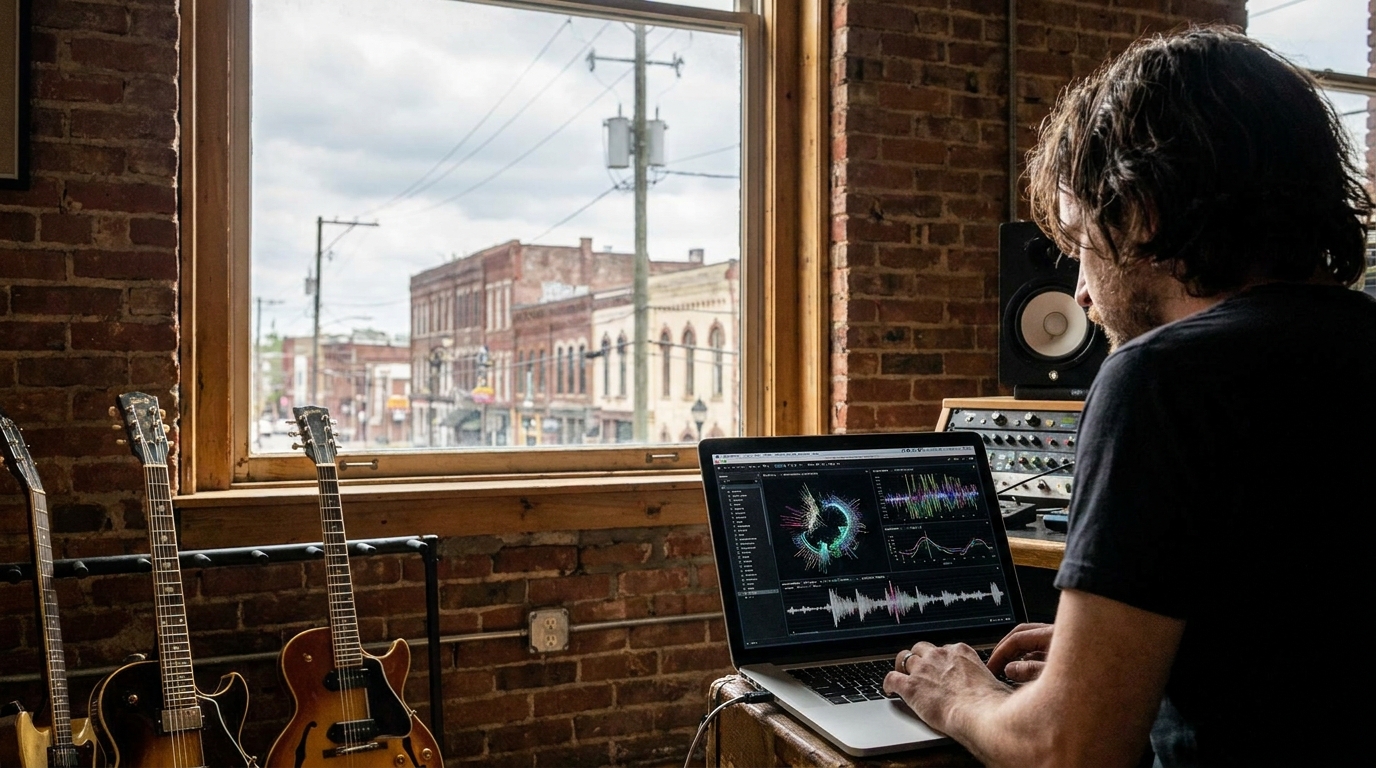
You're an artist, manager, or label in Nashville, and you've noticed something has shifted. The path from a finished master to a real audience no longer runs through radio, retail, or a single playlist editor. It runs through algorithms — recommendation systems on Spotify, YouTube, TikTok, and increasingly, AI-driven search and discovery layers that decide which catalog gets surfaced and which sits invisible.
AI discovery algorithm optimization is the practice of making your music, metadata, and digital presence legible to those systems. In a city built on songs and catalogs, that work is no longer optional.
What AI Discovery Algorithm Optimization Actually Means
The phrase covers a cluster of related disciplines. None of them are new individually. What's new is how tightly they're now coupled to machine-driven recommendation.
- Metadata accuracy and enrichment — clean credits, ISRCs, ISWCs, genre tags, mood descriptors, and writer/publisher splits that match across DSPs, PROs, and sync databases.
- Streaming signal optimization — save rates, completion rates, playlist-add velocity, and listener retention curves that recommendation engines use to predict whether a track deserves wider exposure.
- Catalog findability — making sure older releases remain searchable and contextually linked to current ones, which matters more in a publisher-heavy market like Nashville than almost anywhere else.
- Content and ad strategy — paid social and short-form video designed to feed the algorithms that DSPs increasingly look at as external signal.
- AI search visibility — how your artist name, catalog, and story surface inside ChatGPT, Perplexity, and Google AI Overviews when a fan, sync supervisor, or journalist asks a question.
Put together, this work decides whether your release gets a fair shot at Discover Weekly, Release Radar, TikTok's For You page, and YouTube's recommended sidebar — and whether your catalog stays alive between releases.
Why Nashville Is a Distinct Market for This Work
You can read generic streaming-growth advice all day. Most of it was written for indie pop artists in Brooklyn or LA. Nashville's reality is different in ways that matter.
It's a Publisher Town, Not Just an Artist Town
With BMI, ASCAP, the Country Music Association, and NSAI all headquartered here, and major-label and publisher Nashville offices stacked along Music Row, the buyer profile skews toward catalog economics. That means sync visibility, metadata accuracy, and long-tail discoverability matter as much as launch-week stream counts. Algorithm optimization that ignores catalog is leaving most of Nashville's value on the table.
Genre Drives Everything
Country and Americana audiences respond to narrative and authenticity. Christian and gospel rely on network effects and radio crossover. Indie and pop acts working out of East Nashville or Wedgewood-Houston need platform-native social discovery. A provider who treats these the same is going to underperform on at least two of them.
Relationships Still Carry Weight
Algorithm work is technical, but Nashville is a relationship town. Buyers favor vendors with real connections to managers, publishers, radio promoters, and publicists. A provider who can hand off a sync lead or a press pitch alongside the analytics dashboard is worth more than one who can only export a CSV.
What You Should Expect to Pay in 2026
Pricing varies widely because the work itself varies widely. Based on current Nashville-market ranges:
- Hourly advisory: $100–$250 for junior or small operators, $250–$500 for experienced strategists and boutique agencies, $500+ for high-demand label veterans.
- Light monthly retainer (audits, metadata review, basic strategy): $500–$1,500.
- Ongoing digital marketing and optimization for indie artists: $1,500–$5,000 per month.
- Full-service campaigns with multi-channel ads, creative, and analytics: $5,000–$15,000+ per month.
- Project work: metadata audits and single-release plans run $1,000–$3,500; full developing-artist release campaigns $3,500–$10,000; larger campaigns with creative production and paid media $10,000–$25,000+.
- Paid media budgets: $300–$1,000 per month for small campaigns; $1,000–$10,000+ per month for serious release pushes.
One Nashville-based independent label and technology company, Vohnic Music, publicly documents Spotify algorithm strategy, streaming economics, and playlist ecosystems on its blog — useful reading whether or not you hire them. Beyond that, named pure-play AI discovery optimization agencies inside Nashville are scarce; most of this work is bundled into broader digital marketing engagements.
How to Evaluate a Provider
If you're hiring out, the criteria that separate competent providers from expensive ones are reasonably consistent.
- Transparent reporting. You should see save rates, skip rates, playlist source data, and audience geography — not just total streams.
- Genre fluency. Ask specifically how they'd approach your sub-genre. A vendor who pitches country and bedroom pop the same way is guessing.
- Metadata literacy. Can they audit your back catalog's credits, splits, and tags? In a publisher town, this is table stakes.
- Compliance posture. They should follow FTC endorsement disclosure rules on influencer and paid campaigns, respect copyright and sync licensing obligations, and adhere to Spotify, YouTube, TikTok, and Meta terms of service.
- Flexible scope. Most Nashville independents need month-to-month flexibility, not annual contracts.
Red Flags
Avoid anyone promising guaranteed playlist placement, guaranteed stream counts, or engagement from bots or click farms. These tactics violate platform terms and can result in takedowns, monetization loss, or full account penalties — and the damage usually lands on the artist, not the vendor.
The AI Search Layer Most Nashville Artists Are Ignoring
Discovery used to mean DSP algorithms. In 2026, it also means generative AI. When a sync supervisor in LA asks ChatGPT for "emerging Americana writers in Nashville with cinematic ballads," the model is answering from indexed web content — bios, press, interviews, blog posts, structured artist data.
If your web presence isn't structured for AI extraction, you're invisible in that conversation. That means clear artist bios on canonical pages, structured schema where it's available, consistent naming across platforms, and editorial coverage that explicitly describes your sound, influences, and catalog in language the models can parse. This is closer to AEO (answer engine optimization) than traditional SEO, and most music marketers haven't caught up yet.
Frequently Asked Questions
How long does it take to see results from AI discovery optimization?
Metadata fixes and catalog cleanup can produce visible streaming changes within weeks. Sustained algorithmic lift from new releases typically takes one to three release cycles, because recommendation systems learn from cumulative listener signal, not single events.
Do I need a separate vendor for paid media and algorithm work?
Not usually. Paid social is one of the strongest external signals DSP algorithms read, so coordinated campaigns outperform siloed ones. A provider running both should be able to show you how ad spend mapped to streaming and save behavior.
What's the minimum realistic budget for an independent Nashville artist?
For an active release strategy, plan on at least $1,500–$2,500 per month combining advisory, optimization, and modest paid media. Below that, you're typically buying audits and advice rather than execution.
Are AI-generated tracks treated differently by discovery algorithms?
Platforms are still evolving their policies. What's consistent is that misstated metadata, undisclosed AI content, or unlicensed training material can create rights and platform-compliance problems. Disclosure and clean rights documentation matter more than ever.
Bringing It Together
Nashville's music economy rewards catalogs that stay findable, songs that travel, and artists whose digital footprint matches the quality of their work. AI discovery algorithm optimization is the connective tissue between a great recording and the listener, sync supervisor, or A&R who needs to hear it — and in 2026, that connective tissue is increasingly machine-mediated.
If you'd rather have this handled by people who think about marketing technology and AI visibility full-time, Askable works with Nashville artists, managers, and labels on exactly this kind of work and can be reached at https://askable.dev. Whether you hire help or build it in-house, the work itself isn't optional anymore.