ai-visibility
Las Vegas Tourism AI Brand Mention Tracking Strategies
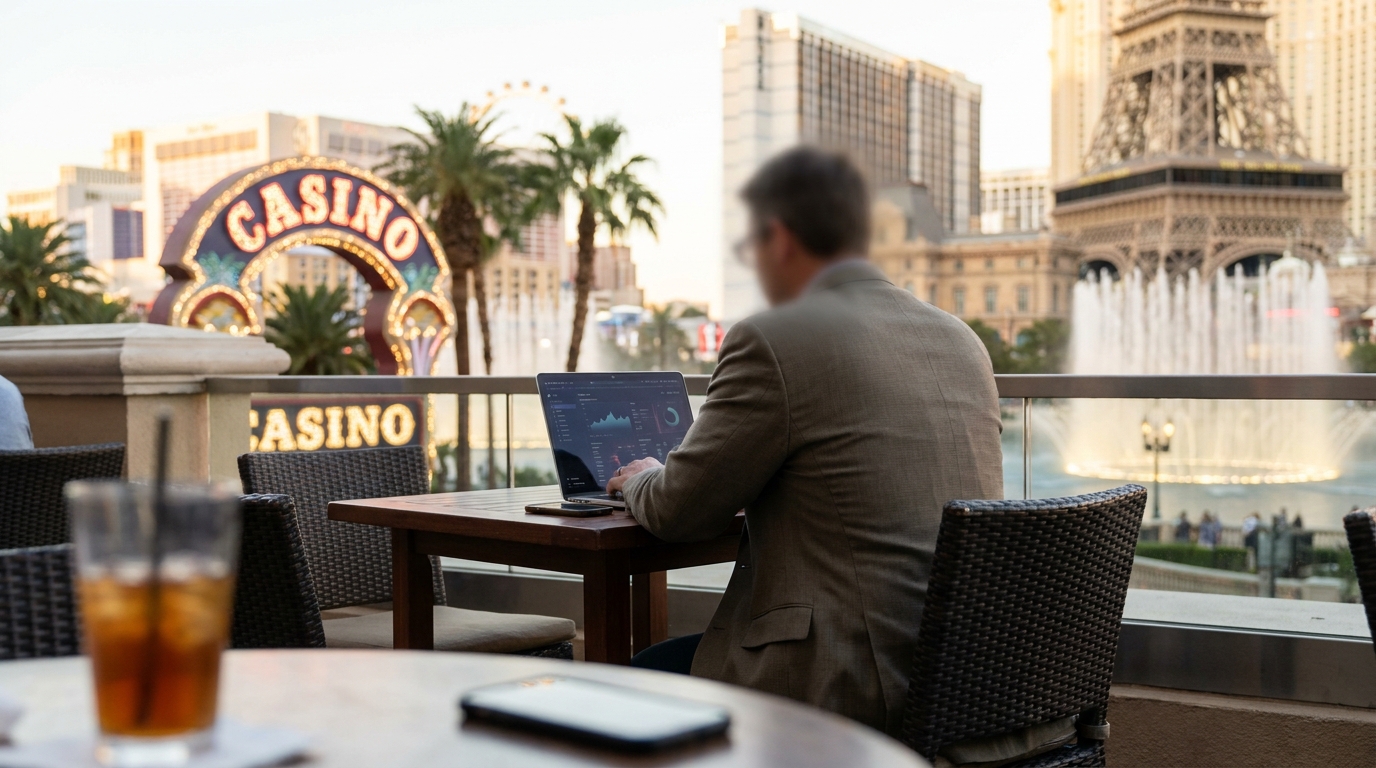
A traveler planning a Las Vegas trip in 2026 no longer starts with a Google search. They ask ChatGPT which Strip resort has the best pool scene, prompt Perplexity for a restaurant near the Fontainebleau, or let Gemini build their itinerary. If your property, restaurant, or attraction isn't showing up in those answers — accurately — you're invisible at the moment of decision.
That's the new reality driving demand for AI brand mention tracking in Las Vegas tourism. This guide walks you through what to monitor, how to monitor it, and where the local context changes the playbook.
Why AI Brand Mentions Now Matter More Than Reviews
Traditional reputation management focused on star ratings and review velocity. Answer Engine Optimization (AEO) — and its broader cousin, Answer Engine and Information Optimization (AEIO) — focuses on something different: whether AI systems mention you, how they describe you, and which competitors they surface alongside you.
The shift is structural. Cvent's 2026 rankings place Las Vegas as the No. 2 meeting destination in North America, with The Venetian, Fontainebleau, and Wynn/Encore among the top 10 meeting hotels. Meeting planners researching those properties increasingly start with conversational AI before they ever touch a CVB site or a sales deck.
At the same time, the LVCVA reported a 4.8% drop in international visitation in early 2026. International travelers researching Vegas in Portuguese, Mandarin, or Spanish are leaning heavily on AI assistants to translate, compare, and decide. If your AI footprint is weak in those languages, you lose that traveler before a human ever touches the lead.
What "AI Citation Tracking" Actually Means
AI citation tracking is the practice of systematically querying large language models and AI search products to see:
- Whether your brand surfaces for relevant prompts ("best luxury resort near the Las Vegas Convention Center," "steakhouse inside Resorts World," "family-friendly pool on the Strip")
- How the AI describes you — tone, accuracy, completeness
- Which competitors are cited alongside you
- Which source URLs the AI is pulling from to build its answer
- Whether your NAP (name, address, phone) data is being represented correctly
This is distinct from traditional social listening tools like Sprinklr, Brandwatch, Meltwater, or Talkwalker, which monitor what humans say about you across social and news. It's also distinct from citation management platforms like Yext, Uberall, Rio SEO, Moz Local, and BrightLocal, which manage your structured listings across directories and maps.
AI mention tracking sits on top of both layers. Your structured citations feed the AI's confidence in your factual data; your social and review signals shape sentiment in its generated answers.
The Las Vegas–Specific Stack
Layer 1: Clean Citation Data
The Strip and Downtown corridors are dense. A listing error — wrong address for a Fremont East lounge, an outdated phone number for a Summerlin restaurant, a confused suite location inside a megaresort — cedes business instantly to the next nearest competitor. AI models reward consistency. If Yext, Apple Maps, Bing Places, and your own site all agree on your NAP, an AI assistant is more likely to surface you with confidence.
For independent restaurants, boutique hotels, and attractions, expect citation management tools to run roughly $20–$80 per location per month. Agency-managed local SEO retainers in this market typically run $500–$1,500 per location per month, depending on scope.
Layer 2: Sentiment and Review Infrastructure
AI assistants synthesize tone from review corpora. Enterprise platforms like Reputation, ReviewPro (Shiji), Medallia, Qualtrics, and Revinate are commonly standardized at the corporate level by branded casino-resort groups. Independent operators in the Arts District, Chinatown along Spring Mountain Road, or Henderson typically run entry-level reputation tools in the $50–$200 per location per month range.
The 24/7 operating rhythm of Las Vegas gaming floors and nightlife venues argues strongly for real-time AI alerting over manual triage. A negative cluster forming at 2 a.m. on a Saturday needs to be flagged before the brunch crowd reads about it.
Layer 3: AI Answer Monitoring
This is the newer layer, and it's where most Las Vegas tourism operators have gaps. You need a repeatable process for prompting major AI engines with the queries your guests actually ask, logging the answers, and tracking changes over time. Mid-market multi-property monitoring bundles tend to land in the $200–$600+ per location per month range, with full enterprise hotel/casino suites running into the tens or hundreds of thousands annually.
Building an AEIO Program for a Las Vegas Property
A practical AEIO program for a Strip resort, a Downtown boutique, or a Henderson destination restaurant typically follows four steps.
1. Define Your Prompt Set
Build 50–150 prompts that mirror real traveler and planner intent. Segment them: transient leisure, group and convention planners, food and beverage, entertainment, nightlife, family travel, and international source markets. The convention layer matters disproportionately here given the city's meetings volume.
2. Establish a Baseline
Run the prompt set across ChatGPT, Perplexity, Gemini, Claude, and Google AI Overviews. Capture the answer text, cited sources, and competitor mentions. This baseline is your point of comparison for every later cycle.
3. Map the Source URLs
AI engines cite specific pages. If your property is being described from a five-year-old Wikipedia paragraph, a defunct travel blog, or an aggregator with stale photos, you have a content gap to close on your owned site and your earned-media footprint. IHG's ChatGPT app integration and Marriott's scaled AI deployment show where branded systems are heading — your data needs to be machine-readable and current.
4. Layer in Compliance
Nevada Gaming Control Board and Nevada Gaming Commission rules govern gaming advertising and promotional content, including age targeting and responsible-gambling messaging. AI-driven content recommendations need guardrails so a generated campaign asset doesn't violate disclosure requirements. NRS 603A and Nevada's opt-out provisions also shape how guest data flows into marketing platforms. Unionized hospitality labor on the Strip adds another layer when AI tools touch staff-related feedback.
Where Local Operators Get Tripped Up
Three patterns recur across Las Vegas hospitality:
- Corporate standardization without local layering. A branded resort may have Sprinklr and Medallia at the enterprise level but no dedicated AI answer monitoring for the property's restaurants, spa, or pool club — the exact experiences travelers ask AI assistants about.
- Citation drift inside megaresorts. A single property may host 20+ outlets. Each needs its own clean citation footprint, or the AI conflates them.
- No multilingual AI monitoring. Given the 4.8% international visitation decline, prompts in Portuguese, Spanish, Korean, Japanese, and Mandarin should be part of any serious program — not an afterthought.
Frequently Asked Questions
How is AEIO different from traditional SEO?
SEO optimizes for ranked link results. AEIO optimizes for being cited, mentioned, and accurately described inside generated answers. The signals overlap — structured data, authoritative content, consistent citations — but the measurement is fundamentally different.
Do I need a separate tool for AI mention tracking?
Yes, in practice. General social listening suites are adding AI monitoring features, but most hospitality operators still run a dedicated layer for prompt testing and answer logging across ChatGPT, Perplexity, Gemini, and Claude.
How often should we audit AI mentions?
For Strip and Downtown properties, monthly is a floor. Weekly is more realistic for properties with active convention calendars, frequent F&B launches, or entertainment residencies that change quarterly.
What about gaming compliance?
Any AI-generated marketing output that touches gaming, promotions, or responsible-gambling messaging needs human review against NGCB guidelines before publication. Build that approval step into your workflow, not after the fact.
Closing Thoughts
AI brand mention tracking isn't a feature you bolt on. It's a discipline that sits across your citation hygiene, your review infrastructure, your owned content, and your compliance posture. In a market as dense and competitive as Las Vegas — where the next resort, restaurant, or show is fifty feet away — being the brand the AI cites accurately is the new version of being the brand the cab driver recommends.
Las Vegas tourism and hospitality operators who want a structured AEIO program built around their specific property, outlets, and source markets can reach Askable at https://askable.dev to scope an engagement.